Fish are a big part of our ecosystem. As someone who loves to spend time out on the water fishing, I appreciate our healthy waterways and all the life within. I recently learned that trees are vital to aquatic life. There is an interconnectedness between trees and different fish species. For example, In freshwater, when trees fall into bodies of water they create shelter for many species of fish. These fallen trees give fish places to escape strong currents or to hang out in deeper areas when water levels drop. These areas are targeted by fishermen to maximise the chance of catching fish by finding big schools of them in one area.
Different types and sizes of trees help in different ways. Large trees have thick roots that help stabilize the banks. This helps with preventing erosion. Smaller trees help by adding nutrients to the soil and water, but have a shorter effect since they break down faster. Trees also give shade, which keeps the water cool. Stable water temperature is key for fish survival. For example, salmon are very sensitive to temperature changes. If the trees around their streams are cut down and the water gets too warm, it could be enough to kill off the salmon in that area.
Trees also provide food. Insects and larvae call the trees home. Many of these bugs end up falling into the water, where fish scoop them right off the water’s surface. This is why fly fishermen always carry lures that look like insects. A good fisherman pays attention to what the fish are feeding on and tries to match the hatch, by using a fly that looks like the real bug.
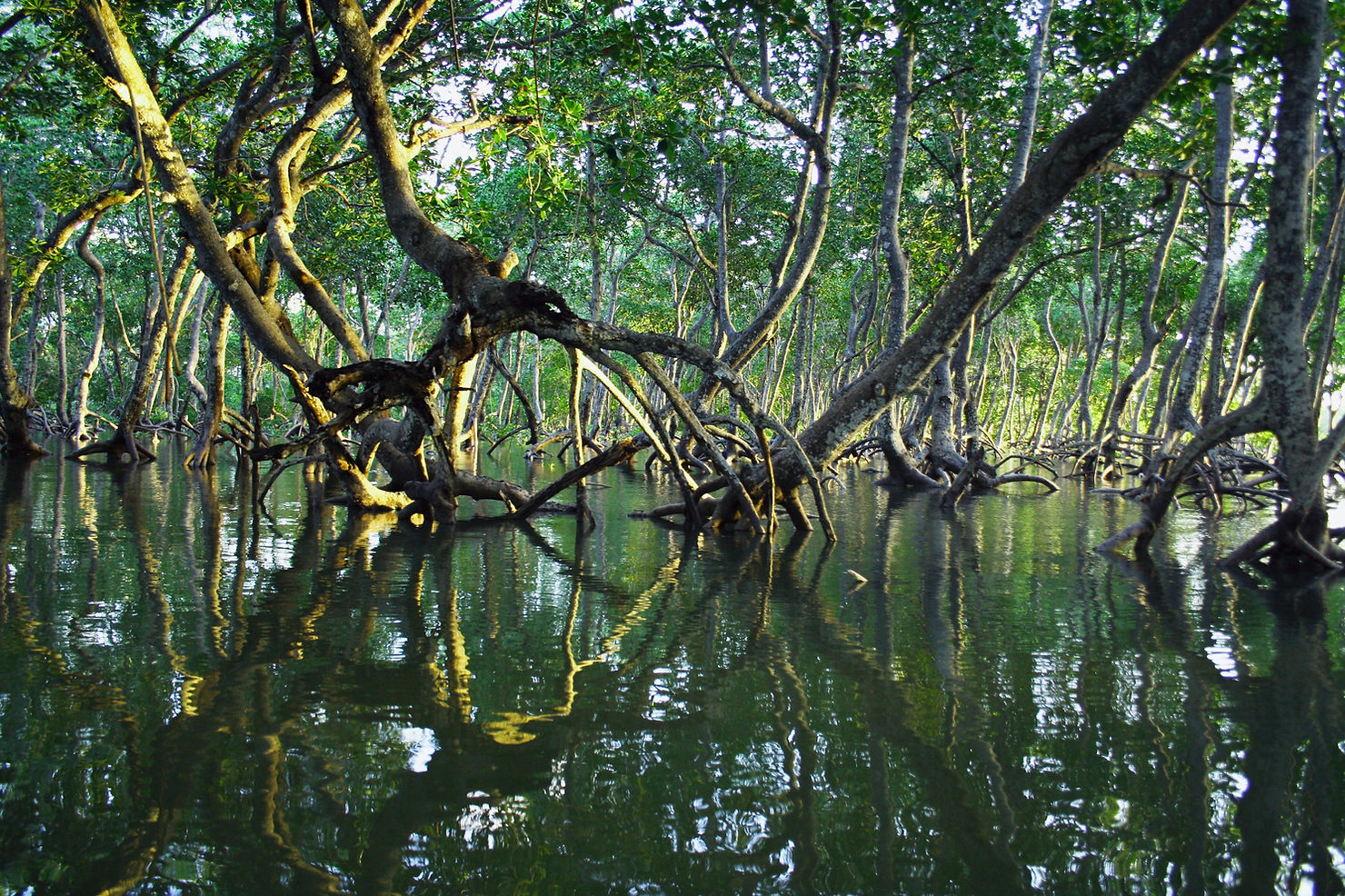
Trees are just as important for saltwater fish, especially mangroves. Mangroves grow along saltwater flats and are home to a lot of marine life. These trees create the perfect nursery for young fish, offering both food and protection from predators. In Florida, species like Snook, Tarpon, and Snapper are often found around the mangroves. Mangroves also help clean the water, making it clearer. These spots attract anglers who want to sight fish. Since the water is so clear anglers can spot the fish from farther distance and make the perfect cast. Unfortunately, mangroves are being destroyed by climate change and human activity. As more mangroves disappear, fish lose the safe places they need to grow up. This has led to a drop in fish populations in many areas, especially among species that rely on mangroves to survive. Many organizations have sprang into action, in an attempt to restore the mangroves and marine health.
Trees play a crucial role in supporting both freshwater and saltwater ecosystems, providing shelter, food, and temperature regulation for fish. Trees’ natural elements are important for keeping up fish populations. That is why protecting and saving tree covered habitats such as mangroves are essential for the future of fishing and the health of our waterways as a whole.
Sources:
 Fisherkidofficial